

If you teach in a public school, you probably know the pressure of a use-it-or-lose-it budget. As the school year winds down, administrators review how much money each department actually spent. If your music budget isn’t fully used, it can send the message that your program doesn’t really need the full amount next year.
That can mean smaller budgets in the future, fewer resources for your students, and more time spent scrambling for supplies or donations.
Instead of rushing to spend leftover funds on low-impact items, you can turn those dollars into a long-term investment—one that makes your classroom safer, more organized, and easier to teach in. That’s where classroom instrument storage racks and carts from BandStorage.com come in.
Low-Value Ways Music Budgets Often Get Spent
When the clock is ticking, it’s tempting to spend leftover money on whatever is easiest to order:
- Extra picks, reeds, or valve oil you don’t really need yet
- Novelty decorations that don’t improve instruction or safety
- Duplicate stands, folders, or accessories that end up in storage
- Impulse purchases of gadgets that students use once and forget
These items aren’t bad on their own—but they don’t address your biggest challenges: crowded rooms, fragile instruments, and constant movement between rehearsals, performances, and storage areas.
A year later, the extra reeds are gone, the posters are fading, and your classroom is still cluttered. By contrast, a well-chosen rack or cart tackles a daily pain point every time you teach.
Why Storage Racks Are a High-Value Purchase
When you’re deciding how to spend the last of your budget, it helps to think beyond this semester. A good storage rack:
- Protects instruments from falls, bumps, and crowded corners.
- Reduces clutter so students can move safely through the room.
- Saves teaching time by making setup and teardown faster.
- Supports multiple ensembles—orchestra, marching band, jazz band, and general music.
- Lasts for years, instead of being used up in a few months.
Compared with consumable items, a sturdy rack is a one-time purchase that keeps paying off. Every time you roll your gear from one room to another (with ease), or your students quickly find their cases, or avoid tripping over a tangled pile of instruments, that rack is earning its keep.
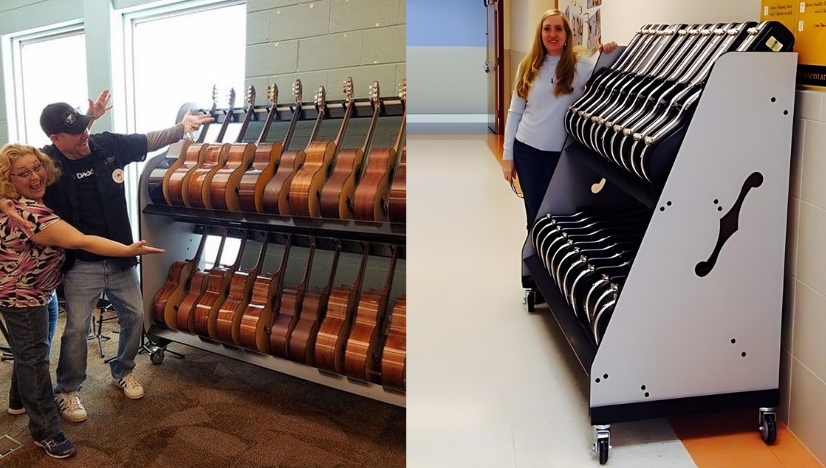
Even if your long-term goal is to install musical instrument lockers, mobile storage racks give you a more affordable, practical way to upgrade your musical instrument storage right now.
How Instrument Racks Directly Support Teaching and Learning
Instrument storage carts do more than hold cases. They change how your class flows.
Faster Transitions
When instruments are neatly arranged on a rack, students can grab what they need in a predictable order. This is especially helpful for:
- Back-to-back ensemble periods
- Pull-out lessons during the school day
- Shared spaces where multiple teachers use the same room
A few extra minutes of music-making each period adds up over the course of a year.
Safer Movement
Loose cases on the floor are a tripping hazard, especially for younger students carrying large instruments. Racks create clear walkways and safer emergency exits. That’s something both administrators and parents care about.
Better Care for School-Owned Instruments
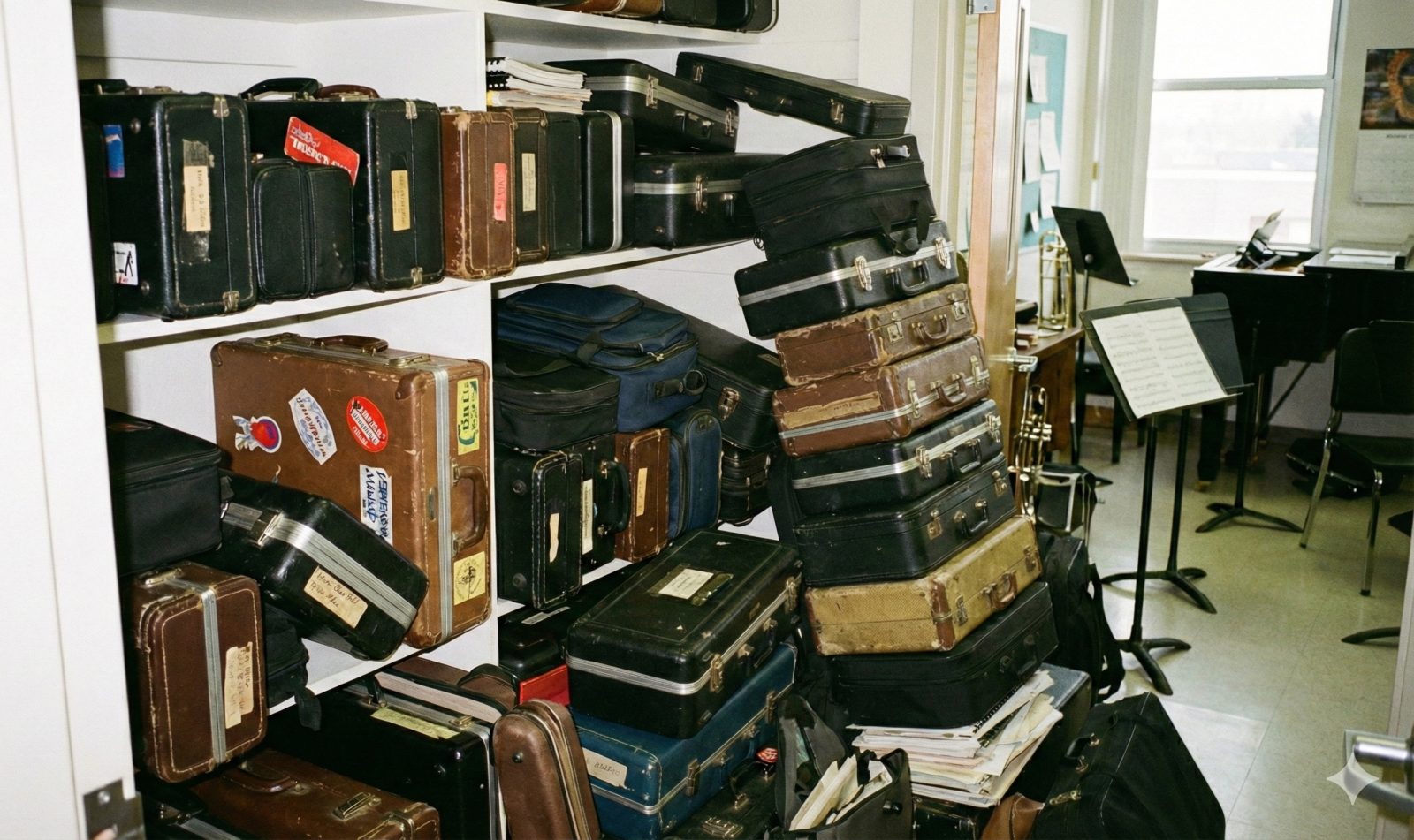
Instruments are expensive. When they’re crammed into corners or piled on top of each other, the risk of damage goes up. Storage racks keep instruments upright, separated, and cushioned, which can reduce repair costs and extend the life of your inventory.
Using End-of-Year Funds Strategically
If you still have money left in your budget, here’s a simple way to decide whether a storage rack is a good use of those funds:
1. Identify Your Daily Pain Points
Ask yourself:
- Do you spend too much time unpacking and re-packing instruments?
- Are students waiting in line for instruments because access is slow?
- Is there a “danger zone” in your room where cases always pile up?
If the answer is yes, a rack addresses a real, recurring problem—not just a wish list item.
2. Consider Future Scheduling Changes
Schedules shift: new ensembles are added, rooms are shared, and classes get moved. Mobile racks keep working no matter how the schedule changes. If your program is likely to grow or change, flexible storage is a smart bet.
3. Think in Terms of Years, Not Weeks
A set of sticks or a box of reeds might last one season. A case rack can support students for many school years. When you spread the cost out over that time, the value per year is often surprisingly low.
How to Talk to Administrators About a Rack Purchase
When you pitch a rack or cart to your principal or department head, frame the purchase in terms they care about:
- Safety: Fewer obstacles on the floor and better emergency egress.
- Protection of assets: Lower repair and replacement costs for school-owned instruments.
- Efficient use of funds: A durable item that supports instruction year after year.
- Program growth: Storage that can handle more students without needing room renovations.
You can also point out that using the full budget this year helps protect next year’s allocation. Investing in proper storage shows that you’re using funds responsibly to improve the learning environment.

Turning “Use It or Lose It” into “Use It and Keep It”
End-of-year music funds can either vanish into low-impact purchases—or be turned into lasting improvements. Choosing instrument storage racks as a year-end investment does three important things:
- 1. Uses your budget in a way that’s easy to justify to administrators.
- 2. Solves real, everyday problems in your band, orchestra, or ensemble room.
- 3. Helps protect future budgets by showing that your program makes smart, student-centered purchases.
Before you rush to buy one more box of reeds or a stack of novelty stands, take a look at how you’re storing the instruments you already own. A well-designed rack today can make every rehearsal next year run smoother.